Choosing the Right Compression Molding Company for Your Manufacturing Needs
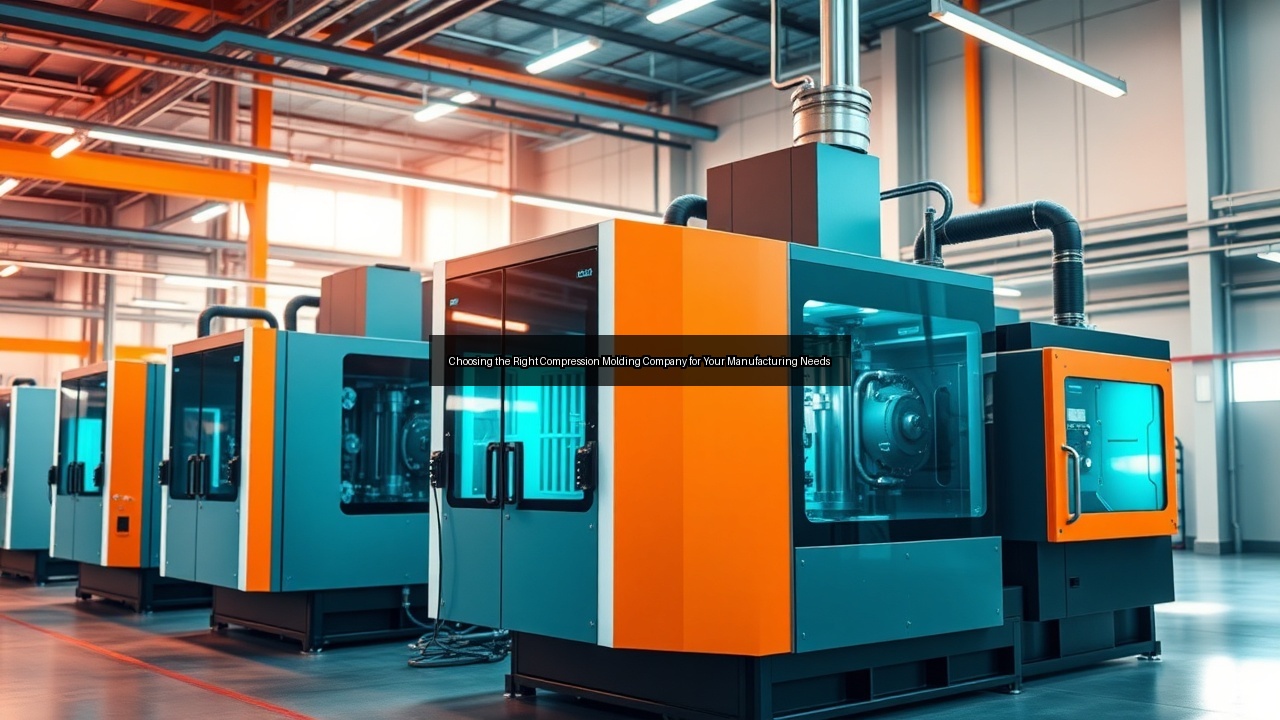
Understanding Compression Molding Services
What is Compression Molding?
Compression molding shapes raw materials into finished parts by placing them into open molds, closing the molds, and applying heat along with pressure until the material cures. Manufacturers select this method for thermoset plastics and composites because it delivers consistent results with minimal waste. A compression molding company often starts by reviewing part geometry and material properties to confirm the approach fits the project. The process works well for thicker sections that demand high strength, and it supports production runs from prototypes to thousands of units. Clients who need compression molding services appreciate the straightforward setup that avoids complex runners or gates common in other techniques.
At its core, the technique relies on precise control of variables such as mold temperature, typically ranging from 300 to 400 degrees Fahrenheit for many thermosets, and closing pressures between 100 and 2,000 psi depending on the resin system. Preforms may take the shape of sheet molding compound (SMC), bulk molding compound (BMC), or loose granules, each chosen to match flow characteristics and fiber content. This flexibility allows engineers to tailor the charge placement so that reinforcement fibers remain oriented along load paths, enhancing tensile and flexural performance in the final component.
Key Advantages of Compression Molding over Other Processes
Compression molding delivers lower tooling costs than plastic injection molding when part volumes stay moderate. It handles large, thick components without the sink marks or flow lines that appear in injection molding. The method also supports insert molding, allowing metal or electronic elements to bond directly during forming. Because material fills the cavity under controlled pressure, fiber alignment improves in composites and final strength increases. Companies that offer compression molding services highlight reduced scrap rates and simpler mold maintenance as practical benefits that lower overall project expenses compared with competing processes.
Additional benefits include the ability to process materials with high filler loadings that would degrade under the high shear rates of injection systems. For instance, long-glass-fiber compounds retain fiber lengths above 12 millimeters, resulting in impact strengths 30 to 50 percent higher than equivalent injection-molded parts. The open-mold loading step also reduces the risk of air entrapment when molding intricate internal geometries such as ribs or bosses, while the absence of sprues and runners eliminates a common source of regrind that can compromise mechanical properties.
Common Applications of Compression Molding
Automotive suppliers rely on compression molding for brake pads, battery trays, and under-hood components that require heat resistance. Electrical manufacturers produce insulators and switchgear housings through the same route. Aerospace firms choose compression molded parts for interior panels and structural brackets where weight savings matter. Medical device makers form silicone seals and enclosures that demand biocompatibility. These compression molding applications demonstrate the technique’s versatility across industries that value durability and repeatable quality from a trusted compression molding company.
Beyond these sectors, the process finds use in heavy equipment for hydraulic valve bodies, in consumer goods for appliance housings, and in renewable energy for wind-turbine nacelle components. In each case, the ability to embed sensors, threaded inserts, or even printed circuit boards during the molding cycle reduces secondary assembly steps and improves long-term reliability under vibration or thermal cycling.
Evaluating Compression Molding Companies
Criteria for Selecting a Reliable Compression Molding Company
Start by confirming the supplier maintains modern compression molding machines with accurate temperature and pressure controls. Request references from past clients in similar industries and review sample parts for surface finish and dimensional accuracy. A capable compression molding company provides clear lead times and material traceability. Look for in-house mold design teams that can adjust specifications quickly when designs evolve. These steps help buyers identify partners who deliver consistent compression molding services without surprises during production scaling.
Buyers should also verify that the facility holds relevant quality certifications such as ISO 9001 or IATF 16949 and that it maintains documented procedures for material lot tracking from incoming resin to finished part. On-site capabilities for non-destructive testing, including ultrasonic inspection for internal voids, further distinguish top-tier suppliers from those that must outsource critical validation steps.
Assessing Company Experience in Compression Molding Processes
Experience shows through the range of materials a supplier has processed successfully, from standard phenolics to advanced carbon-fiber compounds. Ask about specific compression molding processes they have refined, including multi-cavity molds and automated demolding systems. Experienced teams anticipate issues such as uneven curing or flash formation and adjust parameters early. Review case studies that detail how the company solved challenges in compression molding production, and verify their track record with both low-volume and high-volume programs.
Seasoned providers often maintain proprietary process libraries that record optimal press profiles for dozens of resin systems. They can demonstrate successful transitions from prototype tooling in aluminum to production tooling in hardened steel, preserving dimensional repeatability within ±0.005 inches across cavity counts ranging from one to twelve.
Importance of Specifications and Design Capabilities
Clear specifications drive successful outcomes. A strong compression molding company works with customers to translate drawings into mold designs that account for shrinkage, draft angles, and venting. They run simulation software to predict pressure distribution and optimize cycle times before cutting steel. Design support extends to recommending material grades that meet mechanical and regulatory requirements. When specifications stay tight, parts exit the molds ready for assembly with minimal secondary operations.
Advanced firms integrate finite-element analysis early in the quoting stage to forecast residual stresses and warpage, allowing them to propose rib patterns or localized thickness adjustments that improve flatness without increasing cycle time. This collaborative approach frequently reduces the number of engineering change orders once production begins.
The Compression Molding Process Explained
Overview of the Compression Molding Process Steps
The compression molding process begins with material preparation, typically in the form of preforms or granules weighed to exact amounts. Operators load the charge into preheated molds, close the press, and apply pressure while heat triggers curing. After the cure cycle, parts cool under restraint to maintain shape, then operators remove flash and inspect dimensions. Modern compression molding services incorporate sensors that log pressure and temperature data for every cycle, enabling traceability and quick adjustments if results drift.
Post-cure handling often includes controlled cooling fixtures that hold critical dimensions while the part equilibrates to room temperature. Automated vision systems then scan for surface defects such as blisters or resin-rich areas, feeding data back into statistical models that refine future press settings and reduce scrap to below two percent on mature programs.
Comparison with Other Molding Techniques: Injection Molding vs. Compression Molding
Injection molding forces melted plastic through runners at high speed, which suits thin-walled, high-volume parts but struggles with thick sections or fiber-heavy materials. Compression molding applies pressure more uniformly and avoids shear that can break fibers. Cycle times run longer than injection molding, yet tooling remains simpler and less expensive. Manufacturers often select compression molding services when parts exceed injection molding limits or when material properties demand gentler processing conditions.
Transfer molding occupies an intermediate position, offering some of the cavity-filling advantages of injection while retaining the lower shear environment of compression. When comparing all three, compression molding frequently emerges as the most economical choice for parts weighing more than two pounds or containing more than 40 percent reinforcement by weight.
Role of Molds in Compression Molding Production
Molds determine part accuracy and surface quality. They must withstand repeated heat and pressure cycles while maintaining precise cavity dimensions. Hardened steel with proper surface treatments resists wear and reduces maintenance. Well-designed molds include balanced heating channels and strategic vents that allow trapped air to escape without creating flash. A compression molding company that builds its own molds can iterate quickly when production tweaks become necessary.
Chrome or nickel plating on cavity surfaces improves release characteristics and extends tool life beyond 100,000 cycles for many thermoset compounds. Conformal cooling channels produced via additive manufacturing further shorten cycle times by maintaining uniform mold temperatures within ±5 degrees Fahrenheit across large surface areas.
Ensuring Quality and Reliability in Compression Molding
Quality Control Measures in Compression Molding Services
Quality teams perform first-article inspections using coordinate measuring machines and optical comparators. They monitor pressure profiles during each press cycle to confirm material flows completely before curing begins. Statistical process control tracks dimensional trends across shifts. Compression molding services that include in-process checks catch deviations early and maintain high yield rates throughout the run.
Additional protocols often encompass X-ray or CT scanning for internal integrity on high-reliability parts, as well as destructive testing of witness coupons to verify that cure kinetics have achieved the target glass-transition temperature. These layered controls ensure that critical-to-quality characteristics remain within specification even as raw-material lots vary slightly.
Understanding the Impact of Pressure on Molded Products
Proper pressure forces material into every detail of the cavity and expels air that could cause voids. Too little pressure leaves incomplete fills, while excessive pressure can force resin into vents and create flash that requires extra trimming. Skilled operators adjust pressure based on material viscosity and part geometry to achieve dense, void-free compression molded parts with consistent mechanical properties.
Pressure ramp profiles—starting low to allow degassing and then increasing—help minimize knit-line weaknesses in multi-charge layups. Real-time monitoring of hydraulic system feedback allows immediate correction if viscosity changes due to ambient humidity or batch variation, preserving part density above 98 percent of theoretical maximum.
Evaluating Supplier Reliability and Customer Support
Reliability shows in on-time delivery records and responsive communication when issues arise. A dependable compression molding company maintains backup equipment and trained personnel so production continues despite unexpected downtime. Strong customer support includes regular progress reports, clear escalation paths, and willingness to collaborate on design improvements that enhance manufacturability and reduce costs over time.
Leading suppliers also offer consignment inventory programs and vendor-managed replenishment, ensuring that customers maintain uninterrupted supply even during demand spikes. Quarterly business reviews that analyze process capability indices and cost-reduction opportunities further strengthen long-term partnerships.
Future Trends in Compression Molding
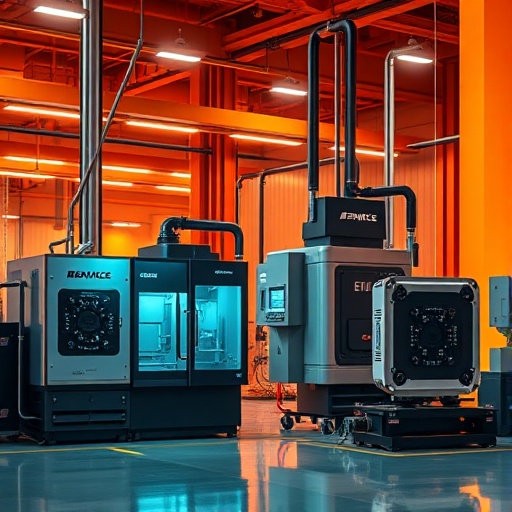
Innovations in Compression Molding Technologies
New press controls integrate real-time feedback loops that adjust pressure and temperature automatically for each charge. Hybrid systems combine compression with light injection elements to speed filling of complex geometries. Additive-manufactured molds now allow rapid prototyping of compression molded parts before committing to production tooling. These advances expand the range of components that compression molding services can address economically.
Industry 4.0 integration enables digital twins of both the press and the mold, permitting predictive maintenance that reduces unplanned downtime by up to 40 percent. Emerging servo-hydraulic presses deliver precise velocity control during closure, improving repeatability for parts that require sub-millimeter feature tolerances.
Sustainability Practices in Compression Molding Services
Suppliers recycle internal scrap by regrinding cured material for non-critical applications. They source bio-based resins and reduce energy use through improved insulation and faster cycle optimization. Some compression molding companies partner with customers to design parts for easier end-of-life disassembly. These practices lower environmental impact while preserving the performance advantages that make compression molding a preferred choice across demanding industries.
Closed-loop water systems and heat-recovery units capture thermal energy from the curing process to preheat incoming charges, cutting overall energy consumption by 15 to 25 percent. Several forward-thinking firms now offer take-back programs that reclaim molded parts for grinding and reuse in lower-specification products, supporting circular-economy goals without compromising regulatory compliance.
See Also
- Unlocking the Secrets of Compression Molding Services for Innovative Product Design
- Top Compression Molding Applications Transforming Everyday Products
- The Art of Compression Molding How Precision and Reliability Shape Industries
- The Future of Compression Molding Services in Sustainable Manufacturing